


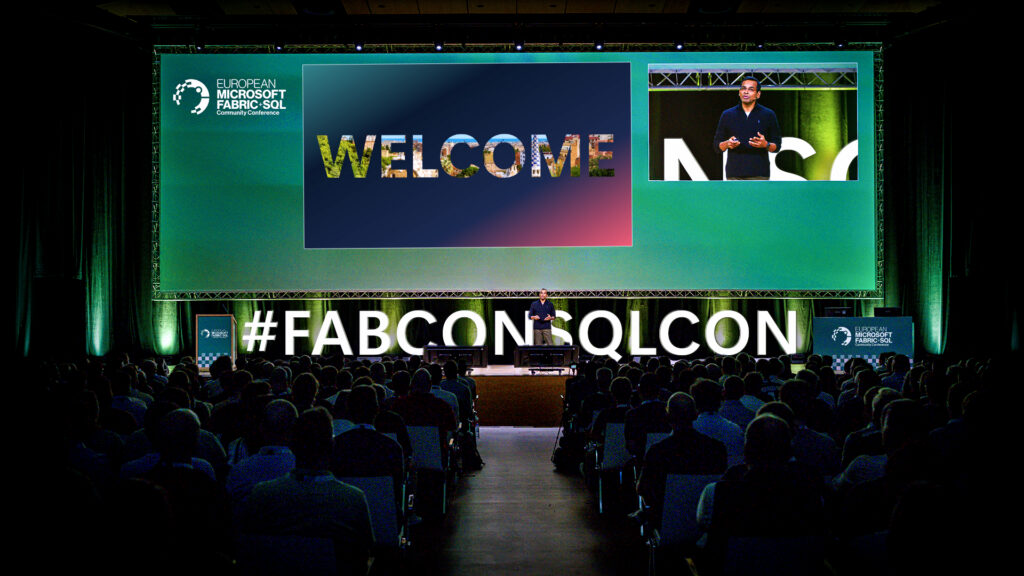
Microsoft Azure outlined its next-generation data platform roadmap at FabCon and SQLCon 2026 in Barcelona, bringing together nearly 5,000 data professionals and developers. The central focus centers on transforming enterprise data into an active foundation for Microsoft Copilot and autonomous AI agents. Instead of simply feeding raw documents into large language models, modern business agents require verified business metrics, semantic context, and governed databases to act reliably.
What Is Changing in Microsoft Fabric and Azure Data
The announcements focus on eliminating the barrier between business intelligence models and AI workflows. Rather than requiring specialized data pipeline rebuilds, Microsoft is integrating semantic data directly into conversational agents.
Fabric IQ integration connects business definitions directly to Microsoft Copilot. Queries submitted in chat automatically reference certified calculations from your Power BI semantic models. This prevents models from hallucinating alternate formulas for revenue, profit, or customer retention. Microsoft also confirmed that leveraging this semantic layer does not incur extra AI token fees.
Agentic application building is entering public preview for Power BI Pro and Premium Per User (PPU) licensing tiers. Instead of writing separate web applications or frontend code, teams can generate functional apps straight from semantic models. These applications go beyond read-only dashboards by supporting direct data entry, form inputs, and write-back capabilities into operational databases.
Database estate management receives a unified control plane. Currently in preview, this centralized interface allows database administrators to oversee on-premises SQL Server, Azure SQL instances, and open-source PostgreSQL from a single vantage point. At the storage engine level, DiskANN vector indexes have reached general availability, enabling fast approximate nearest neighbor vector search directly inside relational engines.
Feature Comparison: Old Approach vs. 2026 Foundation
To understand how these changes simplify enterprise architecture, review the operational differences below:
| Feature Area | Previous Workflow | 2026 Modern Architecture | Status |
|---|---|---|---|
| AI Context | Unstructured documents or custom vector pipelines | Fabric IQ semantic layer with certified business metrics | General Availability |
| App Development | Manual custom app development with separate auth layers | Instant agentic apps with two-way data write-back | Public Preview |
| Vector Search | External specialized vector databases | Native DiskANN indexing within relational databases | General Availability |
| Fleet Management | Fragmented administrative consoles across environments | Unified control plane for SQL Server, Azure SQL, and Postgres | Public Preview |
Why It Matters for System Architects and Administrators
For data architects and system administrators, these announcements reduce the friction involved in building enterprise-grade agentic systems:
- Consistent Metrics Across Agents: Copilot instances using Fabric IQ rely on the exact same data calculations used by executive reports, eliminating conflicting numbers.
- Reduced Operational Costs: Each Power BI app includes up to 1 GB of storage at no additional charge. Compute relies on an on-demand billing model, scaling down during idle periods.
- Hybrid Reliability: Organizations running critical local workloads can deploy SQL Server on Azure Local to retain cloud monitoring while keeping operations resilient at the edge.
Because several components (including agentic app generation and the unified database control plane) are currently in preview, evaluate them in development environments before updating production pipelines.
Have you started deploying Fabric Apps or vector search in your organization? Share your experience in the comments below.