Key points
- Microsoft expands Foundry Agent Service for production-ready AI agents on NVIDIA accelerators.
- Azure now offers inference-optimized infrastructure with first hyperscale cloud for NVIDIA Vera Rubin NVL72.
- Deeper Microsoft Fabric and NVIDIA Omniverse integration enables Physical AI systems from simulation to operations.
At the NVIDIA GTC conference, Microsoft announced new solutions for its AI platform, emphasizing expansions to Microsoft Foundry and Azure infrastructure through its partnership with NVIDIA. According to the announcement, the updates target enterprise-scale AI agents, inference-heavy workloads, and Physical AI integration.
Enhanced Microsoft Foundry for AI Agents
The cornerstone is Microsoft Foundry, which the company describes as “the operating system for building, deploying and operating AI at enterprise scale.” The next-generation Foundry Agent Service is now generally available, enabling organizations to build and operate AI agents that reason, plan, and act across tools and workflows. Foundry Control Plane provides end-to-end observability into agent behavior, aiming to boost developer productivity and enterprise trust.
Additionally, Voice Live API integration with Foundry Agent Service is in public preview, allowing developers to create voice-first, multimodal, real-time agentic experiences. The refreshed Microsoft Foundry portal and expanded integrations with security partners like Palo Alto Networks’ Prisma AIRS and Zenity are also generally available.
NVIDIA Nemotron models are now accessible through Microsoft Foundry, joining a broad model selection. This follows a partnership with Fireworks AI to fine-tune open-weight models into low-latency assets for edge distribution, according to the announcement.
Azure AI Infrastructure for Scale
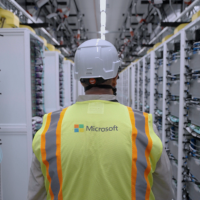
Microsoft is optimizing Azure AI infrastructure for inference-heavy, reasoning-based workloads. The company states it has deployed hundreds of thousands of liquid-cooled Grace Blackwell GPUs globally and is the first hyperscale cloud to power on NVIDIA’s newest Vera Rubin NVL72 systems in labs, with rollouts to Azure datacenters planned.
This infrastructure is engineered to integrate next-generation NVIDIA systems into Azure datacenters designed for power, cooling, networking, and rapid generational upgrades. Microsoft says this allows customers to maintain agility at the leading edge.
For sovereign and regulated environments, Microsoft announced Foundry Local support for modern infrastructure and large AI models, with initial support for NVIDIA Vera Rubin on Azure Local. This extends capabilities to customer-controlled environments while using Azure Arc and Foundry Local for consistent operations, governance, and security.
Physical AI and Real-World Systems
Microsoft and NVIDIA are advancing Physical AI through the NVIDIA Physical AI Data Factory Blueprint hosted on Microsoft Foundry at cloud scale. This supports a Physical AI Toolchain for building, training, and operating robotics workflows that connect physical assets, simulation, and cloud training.
A public Azure Physical AI Toolchain GitHub repository has been released, integrating with NVIDIA Physical AI Data Factory and Azure services. Deeper integration between Microsoft Fabric and NVIDIA Omniverse libraries connects live operational data with physically accurate digital twins and simulation.
This approach allows organizations to transition from passive monitoring to coordinated, AI-driven action across machines and facilities. Companies in manufacturing and operations are using these pipelines for real-time decision-making in physical environments.
Discover more from Windows Mode
Subscribe to get the latest posts sent to your email.