-
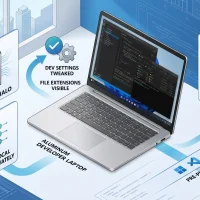
Project Zenith delivers a specialized Windows 11 configuration tuned specifically for coders and engineers. -
Comes pre-loaded with developer essentials: Visual Studio Code and Windows Terminal pinned to the Taskbar, visible file extensions, and zero promotional feed noise. -
Powered by AMD Ryzen AI Halo silicon with 64 GB+ unified memory, capable of running local AI models with over 30 billion parameters. -
Sold exclusively as a turnkey hardware and software package on new developer devices, not as a standalone software download.
Setting up a new computer for programming can easily eat up half a workday. Developers usually spend hours downloading code editors, adjusting hidden system settings, and turning off unwanted notifications. Microsoft is looking to change that with an initiative called Project Zenith.
Announced on the official Windows Developer blog, Project Zenith delivers a ready-to-code version of Windows 11 on high-end laptops and desktops. The goal is simple: let developers unbox a machine and start writing code immediately.
What Comes Pre-Configured in Project Zenith?
Instead of the standard retail setup, Project Zenith machines come with developer-first defaults straight from the factory. Everyday distractions are switched off, and essential programming utilities are ready on first boot.
| Feature | Standard Windows 11 | Project Zenith Edition |
|---|---|---|
| Taskbar Apps | Edge, File Explorer, Microsoft Store | Visual Studio Code and Windows Terminal pinned |
| File Explorer | File extensions and hidden files hidden by default | File extensions and hidden files visible immediately |
| Start Menu | Shows tips, promotions, and recent recommendations | Clean layout with promotional tips turned off |
| System Search | Standard web and desktop search | Command Palette mode enabled by default |
High-End Hardware Built for Local AI
Project Zenith is not just a software skin. It is tied to new high-performance hardware designed to handle demanding workflows, particularly running artificial intelligence models directly on your desk.
The first wave of Zenith PCs features AMD’s Ryzen AI Halo processors. These machines include at least 64 GB of unified memory and an ultra-fast memory bandwidth of 250 GB per second.
In practical terms, unified memory means the processor and the graphics card share the same high-speed memory pool. This allows the computer to run large AI models with 30 billion or more parameters entirely on the local machine. Developers can test and run AI agents privately on their PC without paying cloud API fees or worrying about data leaving the device.
While AMD powers the launch devices, Microsoft noted that other computer manufacturers and chip makers will release Project Zenith systems in the future.
Who Is Project Zenith For?
It helps to be realistic about where this fits in the market:
- Great for: Software engineers, data scientists, and developers building local AI applications who want a fast, distraction-free environment without manual setup time.
- Not necessary for: Everyday users, students, or casual PC owners. If you use your computer for web browsing, office documents, or casual gaming, the specialized tools and high memory will not offer much extra value.
Because Project Zenith is tied to specific partner hardware, you cannot simply download an installer to turn an existing laptop into a Zenith machine. Additionally, Microsoft pointed out that some of the security features around autonomous AI agents are still developing, meaning this platform will continue to mature over time.
Over to you: Would you buy a dedicated developer PC that comes pre-configured, or do you prefer setting up your own Windows installation from scratch? Share your thoughts in the comments below.
Read the full announcement on the Windows Developer Blog.
Discover more from Windows Mode
Subscribe to get the latest posts sent to your email.
















Add your first comment to this post